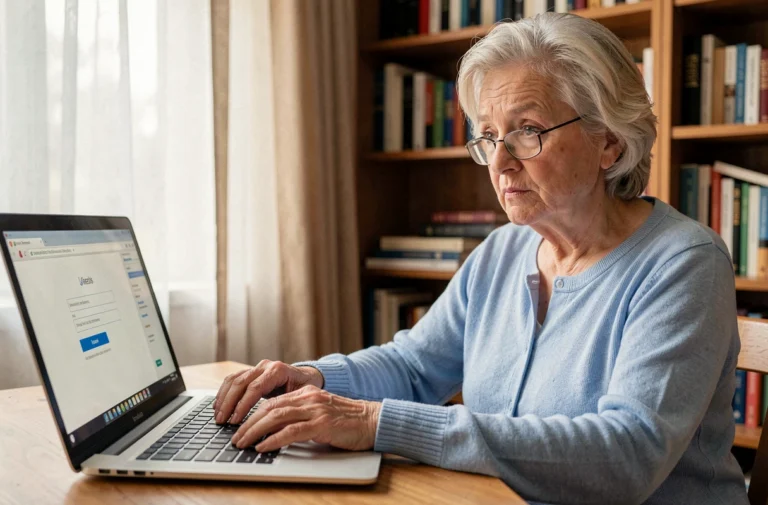
One hundred sixty-three hours a year. That’s the average time each employee spends filling out, checking, or searching for administrative paperwork. It’s absurd when we know that, for over ten years, digital tools could have eliminated these tedious tasks. Yet, in many companies, leave management is still done with paper forms, and pay slips get lost in forgotten binders. The paradox? Solutions exist, but too often, employees are unaware of their scope or ease of use.
The proliferation of HR software and personnel management platforms blurs the lines. Among this avalanche of tools, it becomes difficult to distinguish those that truly deliver on their promises: ease of access, centralized information, user-friendly design. The offerings are abundant, but not everyone can navigate them.
Why online employee access has become essential in professional life
The massive arrival of remote work and digitalization has completely reinvented personnel management. Today, online employee access is no longer just for viewing pay slips or requesting leave. It shapes daily life: managing schedules, obtaining certificates, communicating with HR—all now go through the platform. With the digital workplace, the employee is at the heart of the system, and communication between colleagues flows smoothly, regardless of distance.
In the face of this transformation, the right to disconnect emerges as a new compass. Framed by the Labour Code and monitored by the CNIL, it compels companies to rethink their digital tools. Modern platforms do not compromise on security: strong authentication, VPN, encryption, custom interfaces. Even better, they simplify access to training, work time management, or handling administrative requests. The result: a more serene experience and real progress for quality of life at work.
Expectations are evolving: balance between private life and professional activity, quick processes, clearly displayed rights. A portal like Mon Portail Securitas ticks these boxes by centralizing all useful information and supporting remote collaboration. Employees thus have a secure space designed for mobility, decentralized schedule management, or flex office.
Here’s what the best HR platforms concretely provide:
- Immediate access to all HR documents and information
- Simplified processes for managing absences or remote work
- Strict compliance with GDPR and confidentiality requirements
- Effective tools for training and career tracking
Internet connectivity is now recognized as a work tool by the Court of Cassation: the employer can cover it, or even reimburse it. The telework charter, validated by the CSE, sets the rules of the game. The annual follow-up meeting for remote work becomes the norm. Now, data security, home ergonomics, expense management, or technical support fall under integrated management, driven by these connected platforms.

Overview of HR tools that truly facilitate employees’ daily lives
Today, human resource management relies on a range of digital tools designed to lighten the relationship between employees and HR services. From welcoming a new hire to managing leave, through training or career tracking, each step benefits from a tailored solution.
Digital workplace platforms are becoming the single entry point to access all documents, manage absences, or submit a remote work request. The HRIS (human resources information system) automates what was once an administrative headache: less waiting, fewer errors, more efficiency. The electronic signature complements the whole, allowing contracts or amendments to be validated without travel or disruption, even remotely.
On the collaboration side, instant messaging and videoconferencing tools simplify teamwork, whether local or distributed. Customized dashboards provide a comprehensive view of activity, scheduling, or training undertaken. As for electronic document management (EDM) solutions, they ensure confidentiality, traceability, and compliance with GDPR.
The most advanced HR solutions share several key strengths:
- Centralization of all administrative and HR processes
- Secure access to personal and professional data
- Automation of processes: absences, remote work, expense reports
- Facilitated tracking of training and employee development
A coherent digital ecosystem, secure access via VPN or strong authentication, and a clear interface: these are the ingredients that transform administrative routines into simple actions. The right to disconnect is respected, privacy is preserved, and employees’ daily lives are significantly lightened.