Between a battery-powered pole pruner and a thermal pruning chainsaw, the differences in weight, autonomy, and cutting capacity are such that choosing the wrong type amounts to paying twice. This article compares the measurable parameters that separate the major families of pruners, to identify the model suited to the actual nature of your maintenance work.
Pole pruner, pruning chainsaw, and secateurs: what the specs reveal
| Type of pruner | Working height | Common cutting diameter | Average weight (without battery/fuel) | Main use |
|---|---|---|---|---|
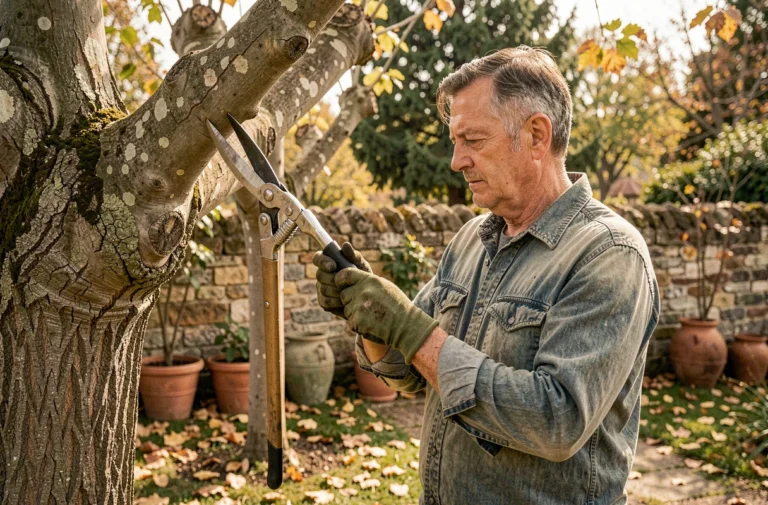
| Secateurs (manual or pneumatic) | Arm reach or light pole | Small branches (a few centimeters) | Very light | Training pruning, fine branches |
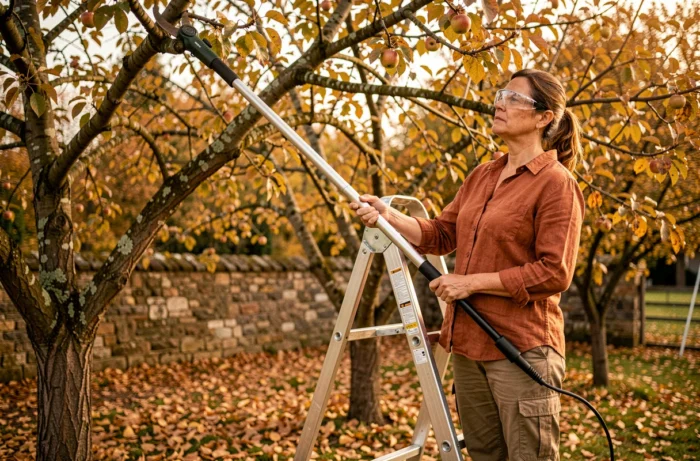
| Pole pruner (battery or thermal) | Up to several meters from the ground | Medium branches | Moderate to heavy depending on the motorization | High pruning without a ladder |
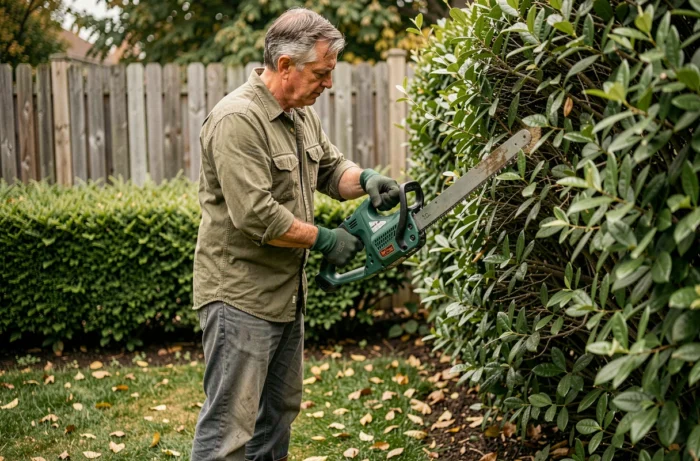
| Pruning chainsaw (top-handle) | Work at climber’s level | Thick branches | Light for a chainsaw | Heavy pruning, branch felling |
This table highlights a point that buying guides rarely address directly: the type of pruner influences the working posture as much as the cutting capacity. A pole pruner allows you to stay on the ground, reducing the risk of falling. A top-handle pruning chainsaw, on the other hand, implies climbing into the tree or using a lift.
For the majority of homeowners maintaining a garden with a few trees, the pole pruner covers nearly all needs. Comprehensive references of models, categorized by motorization and use, are available on elagueuse-warrior.com to refine your choice according to your situation.
Battery or thermal engine: selection criteria beyond autonomy
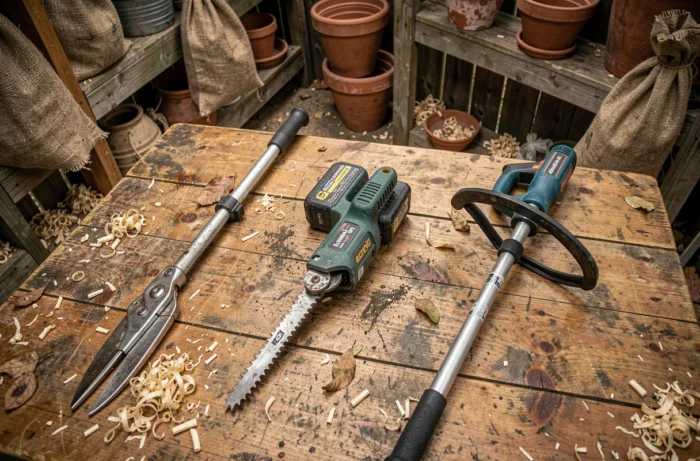
Most comparisons pit battery against thermal solely on autonomy. This criterion matters, but it masks a parameter that will weigh increasingly: battery replaceability.
The European regulation on batteries stipulates that from February 18, 2027, portable batteries integrated into devices must be easily removable and replaceable by the user, with exceptions. For a pruner purchase today, checking whether the manufacturer sells the battery separately and if replacement does not require specific tools is anticipating the actual lifespan of the machine.
Thermal motorization: for which profiles
The thermal engine remains relevant in two specific cases. The first: long pruning sessions (several hours) on trees with thick branches, where the autonomy of a standard battery is insufficient. The second: use far from any power outlet, without the possibility of recharging between interventions.
In return, thermal engines generate noise, higher vibrations, and require regular maintenance of the engine (spark plug, filter, mixture). For a typical garden with occasional interventions, batteries offer a better weight-noise-maintenance compromise.
Wired 230V pruner: a marginal case
Wired models still exist, but the constraint of the cable severely limits maneuverability at height. This type of motorization is only justified for very occasional use, in immediate proximity to a socket, on branches accessible without significant pole extension.
Guide bar length and chain pitch: the two technical data to read first
The guide bar determines the maximum diameter of branch that the pruner can cut in a single pass. A longer guide does not automatically mean a better tool: it increases the weight at the end of the pole and reduces maneuverability.
- For regular garden maintenance (small to medium diameter branches, soft to medium-hard wood), a guide of about twenty centimeters is sufficient in the vast majority of cases.
- For thicker branches or hard wood (oak, hornbeam), a longer guide combined with higher motor power becomes necessary, but the weight of the whole increases significantly.
- The chain pitch influences the fineness of the cut and the effort required from the motor. A reduced pitch cuts more finely with less power, while a wider pitch attacks the wood faster but demands more from the motorization.
A short guide with a fine chain pitch is better suited for regular domestic use than an oversized setup that will tire the user before the end of the intervention.
Safety and pruning period: two often overlooked angles
Online comparisons detail cutting performance without always addressing the safety constraints that determine whether you can actually do the job yourself.
Working near power lines
A pole pruner allows you to reach high branches, including those near power cables. The INRS is among the prevention references to consult for work near electrical installations. A homeowner should never intervene on branches close to a live power line: this type of pruning falls under a qualified professional and the network manager.
Intervention period and biodiversity
The French Office for Biodiversity recommends avoiding pruning trees and trimming hedges during the nesting period. This recommendation does not equate to a general prohibition for homeowners, but the protection of nests and eggs of protected species applies year-round. Pruning outside the breeding season (generally from March to August) reduces the risk of inadvertently destroying an occupied nest.
- Visually check for the presence of nests before any intervention, even outside the nesting period.
- Prefer autumn or early winter for pruning deciduous trees, a period when the tree is in a vegetative rest.
- Do not confuse light maintenance pruning (removal of dead wood) with structural pruning, which affects wildlife more significantly.
The choice of a pruner is therefore not limited to the technical sheet. The period, the immediate environment of the tree, and the nature of the branches to be cut guide the decision as much as the power of the motor or the battery capacity. A tool suited to the actual diameter of the branches and the effective working height covers most needs of a garden without disproportionate investment.