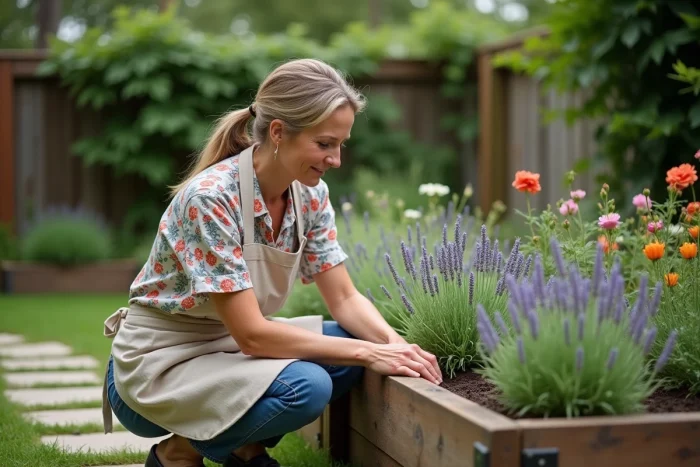
The French garden is changing its function. Long treated as a static plant decoration, it is gradually becoming a fully-fledged living space, designed for sensory comfort, biodiversity, and thermal regulation. Transforming a garden into a haven of peace is not just about placing furniture and planting a few perennials. It requires understanding how soil, light, materials, and sounds interact to create a place where the body truly relaxes.
De-paving the garden soil to gain freshness
The nature of the soil directly affects the thermal comfort of a garden. A fully paved or gravelled terrace stores heat and releases it in the evening, turning the outdoor space into a furnace as early as June.
Since 2023, several French municipalities have been encouraging the de-paving of garden soils. The City of Paris, through its “Permis de végétaliser” initiative, and metropolitan areas like Lyon and Strasbourg offer technical or financial assistance to replace slabs and gravel with planted surfaces. The stated goal: to reduce urban and peri-urban heat islands.
In practical terms, this means that tearing out part of the paving to install flower beds, ground covers, or even a simple strip of meadow has a measurable impact on the perceived temperature nearby. The physical principle is clear: a living soil absorbs and evaporates, whereas a mineral soil reflects and accumulates.
For a garden designed as a refuge, this question of soil deserves to be addressed first, before choosing plants or furniture. It determines the framework within which everything else will function, including on the Inside Out website dedicated to gardens, where outdoor design approaches take this basic data into account.
Sensory gardens: what horticultural therapy brings to private landscaping
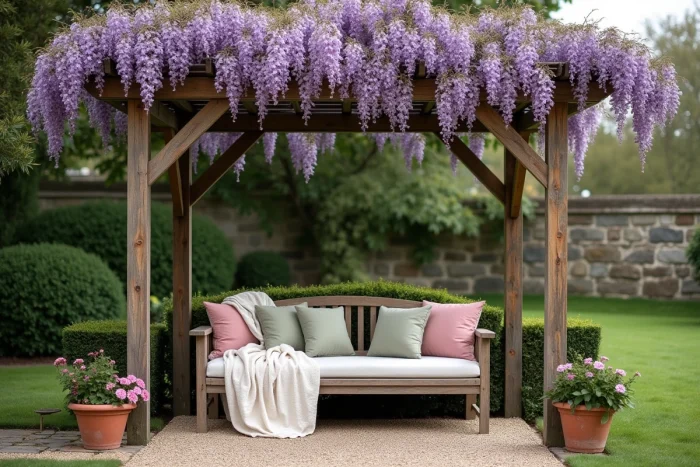
The idea of a soothing garden often relies on a visual impression. Experiences from horticultural therapy (care through gardening, practiced in university hospitals and nursing homes) show that well-being first comes from stimulating non-visual senses: smell, touch, hearing.
Since at least 2022, landscapers and therapists in “healing gardens” have been integrating specific sensory devices into private gardens. Three categories consistently emerge:
- Fragrant plantings placed near resting areas (lavender, jasmine, mint) that release their scents effortlessly, upon passing or contact
- Barefoot paths alternating round gravel, raw wood, and short grass, designed to engage the arch of the foot and anchor attention in the present
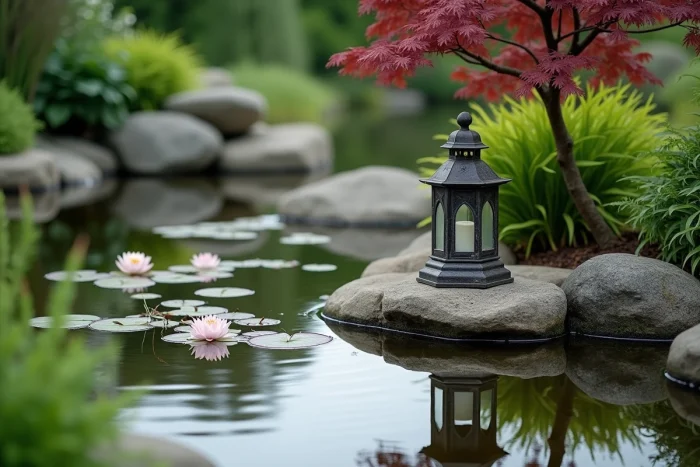
- Water points with controlled noise (small pond, low-flow fountain) whose continuous sound masks urban noise disturbances
These elements are not a matter of landscaping luxury. They reflect a functional logic documented in a medical context and adaptable to a modest-sized garden. A simple shallow pond combined with two fragrant beds radically changes the atmosphere of an outdoor space.
The trap of the decorative zen garden
Images of minimalist Japanese gardens circulate abundantly. However, a garden composed solely of raked gravel and a few stones on impermeable soil has two flaws: it heats up in summer and offers no real sensory stimulation. The original zen style always incorporates water, moss, and trees, three living elements that decorative versions eliminate.
Creating a biodiversity refuge in your garden
The “Refuge Gardens” program by the League for the Protection of Birds (LPO) is based on simple commitments: installing birdhouses, maintaining uncut areas, planting hedges of local species.
A garden welcoming to wildlife also becomes a more vibrant garden for its human inhabitants. The song of birds, the passage of a hedgehog, the buzzing of pollinators create a sound and visual tapestry that furniture or lighting cannot replicate.
The approach does not require a large plot. A diverse hedge a few meters long, a pile of dead wood left in a corner, a strip of flowering meadow not mowed before July: these micro-developments are enough to attract a varied wildlife.
Reduced maintenance and a calming garden: a direct link
A common paradox: the garden meant to provide rest becomes a source of stress due to the maintenance it requires. Weekly mowing, regular pruning, and constant weeding consume time and energy. Semi-wild areas reduce this burden while enhancing biodiversity.
Accepting a less manicured lawn and less defined borders decreases maintenance time without harming the overall aesthetics. The available data do not allow for precise calculation of time savings, but feedback from amateur gardeners converges on this point.
Garden furniture and lighting: choosing for durability
Garden furniture represents an investment that determines the actual use of the space. Uncomfortable garden seating or furniture that deteriorates in two seasons drives people away from the outdoors.
Three criteria deserve special attention:
- Resistance to UV and moisture, which eliminates some low-quality resins and directs towards treated wood, aluminum, or powder-coated steel
- Real ergonomics (sufficiently deep seating, inclined backrest), as a garden chair should allow sitting for an hour without discomfort
- Low-intensity lighting at seating height, which extends the use of the garden in the evening without dazzling or disturbing nocturnal wildlife
Too powerful lighting destroys the calming atmosphere of a garden in the evening. Downward-facing spotlights, placed less than a meter from the ground, produce enough light for movement while preserving the relative darkness that promotes relaxation.
Transforming a garden into a haven of peace is less about a shopping catalog than a series of technical choices regarding soil, plants, and the use of space. Freshness in summer, sensory richness in daily life, and the presence of active local wildlife form a foundation that furniture and decoration complement, not replace.