The maintenance of a house relies on precise technical gestures, applied at the right time and with the right materials. Improving and maintaining your home does not necessarily require a high budget or professional skills. The ten tips that follow target concrete points, from filling cracks to ventilating damp rooms, for a healthier and more sustainable interior.
1. Reapply bathroom silicone joints with anti-mold silicone
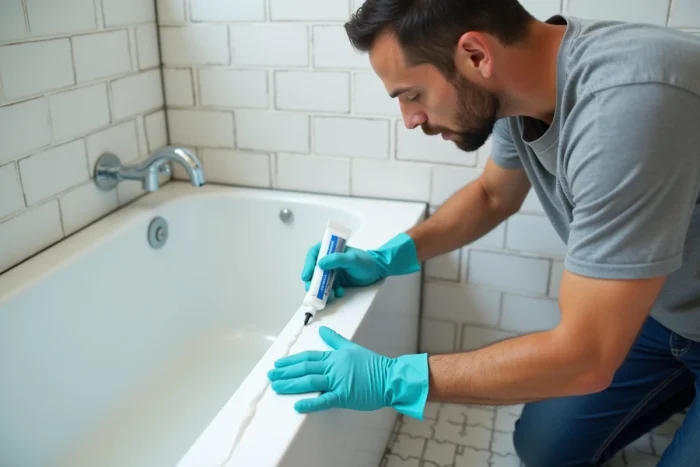
Blackened or detached joints allow water to seep behind the tiles. The degradation of the materials behind progresses without anything being visible for months.
To redo a joint properly, remove the old one with a cutter or joint scraper. Clean the surface with household alcohol, let it dry, then apply a regular bead of special anti-mold silicone. Smooth it with a wet finger dipped in dish soap. The result lasts several years if the room is properly ventilated.
To explore other interventions of this type, you can consult the home page of Blog du Bricoleur which details complementary techniques.
2. Ventilate daily to prevent humidity

Indoor humidity promotes mold, degrades paints, and alters the quality of the air breathed. Santé publique France emphasizes the importance of monitoring cold spots and detecting mold early.
Opening windows for ten to fifteen minutes every morning, even in winter, is enough to renew the air without cooling the walls. In rooms without openings, check that the VMC outlets are not obstructed by dust. A vacuum cleaner with a fine nozzle is sufficient to clear them.
3. Fill a hole or wall crack with suitable filler
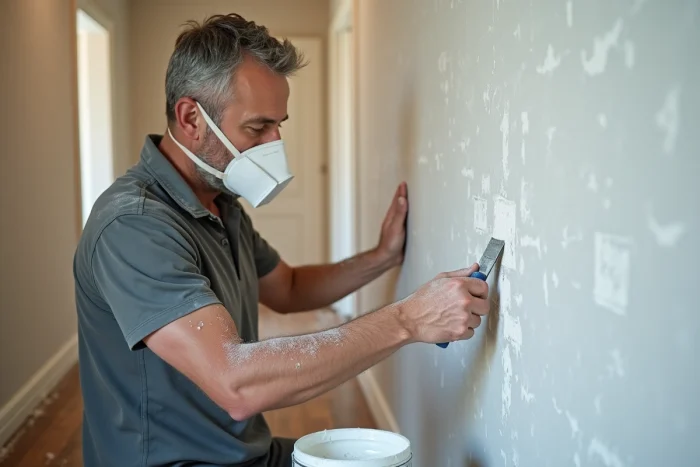
A screw hole or hairline crack does not require a mason or a significant budget. Ready-to-use tube filler is suitable for small cavities.
Apply the filler with a filling knife, crossing the passes. Let it dry according to the manufacturer’s instructions, then sand with fine-grit sandpaper. A primer before the final paint guarantees a clean result. For active cracks (those that return after repair), a strip of mesh embedded in the filler absorbs micro-movements of the substrate.
4. Use white vinegar as a multi-surface descaler
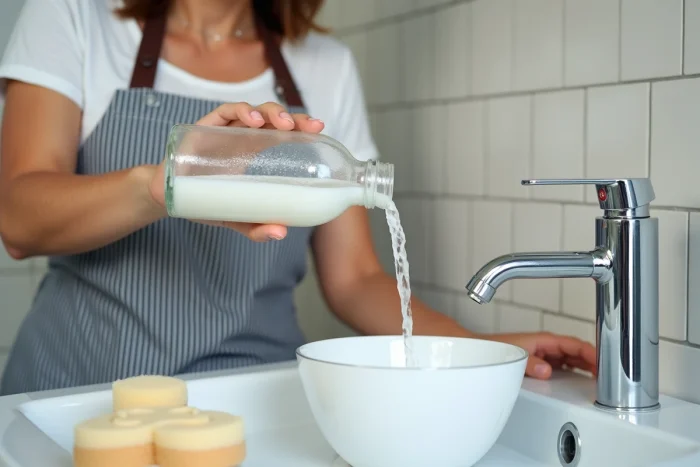
White vinegar dissolves limescale on faucets, shower walls, and kettles. It replaces most commercial multi-surface cleaners without generating chemical residues in indoor air.
The ADEME recommends favoring less aggressive methods for materials and air quality. However, the vinegar-baking soda mixture often presented as a miracle has a limited effect: the acid-base reaction neutralizes both products. It is better to use them separately, each on the type of dirt that corresponds to it (limescale for vinegar, grease for baking soda).
5. Install click PVC flooring for renovation without demolition
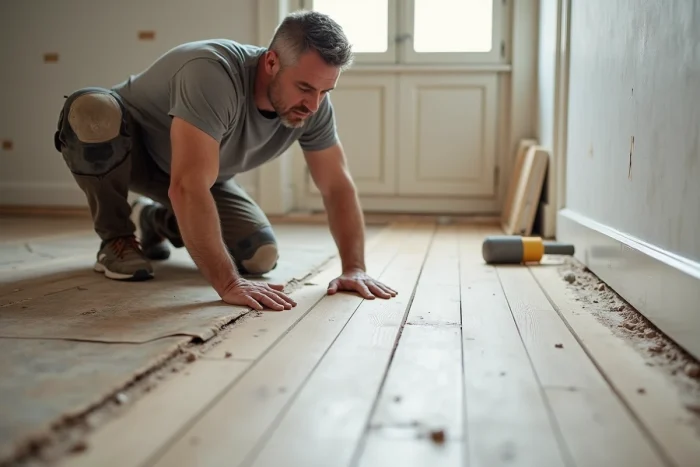
Replacing damaged tiles is expensive in labor and time. Click vinyl planks can be laid directly over the existing flooring, provided it is flat and dry.
- Click PVC flooring: floating installation, no gluing, removable in case of moving.
- Adhesive tiles: suitable for small areas like a pantry or an entryway.
- Modern lino: moisture-resistant, available in custom-cut rolls.
These solutions are well resistant to moisture and can be maintained with a simple mop. The cost remains significantly lower than traditional tiling installed by a professional.
6. Maintain gutters before each rainy season
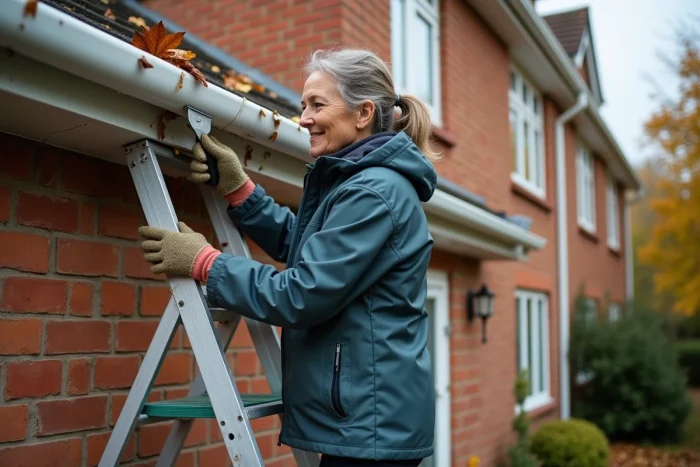
A blocked gutter causes overflow that damages facades and foundations. This preventive work takes less than an hour and avoids costly repairs.
Climb a stabilized ladder, remove the clumps of leaves by hand (gloves required), then rinse with a water jet while checking the flow down to the downspout. Install a leaf guard if trees overhang the roof. This seasonal cleaning gesture significantly extends the lifespan of the gutter.
7. Revamp an old piece of furniture with a bonding primer
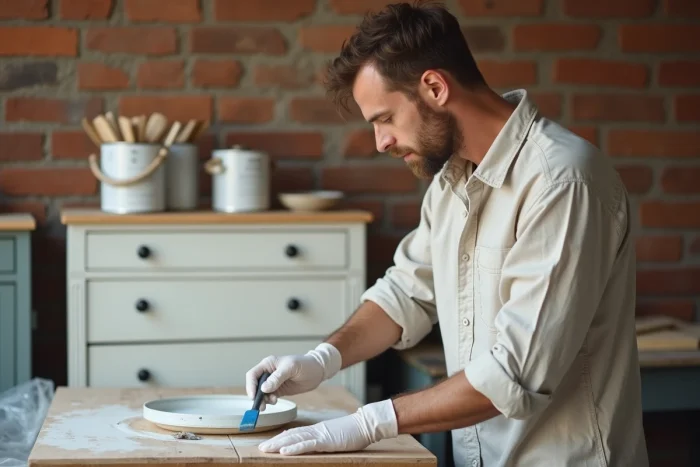
Replacing a functional but outdated piece of furniture is more expensive than repainting it. The technical key lies in the choice of bonding primer, which allows the paint to adhere to varnished, melamine, or laminated surfaces without heavy sanding.
Dust, degrease with alcohol, apply the primer, then two coats of matte or satin paint. The result transforms a dresser or coffee table for the price of a can of paint and a foam roller.
8. Change a light fixture yourself while respecting electrical safety
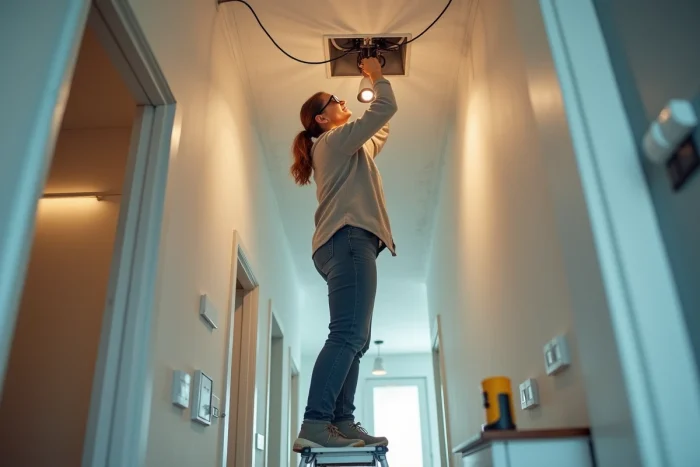
Replacing a pendant or ceiling light does not require being an electrician. The non-negotiable rule: turn off the main circuit breaker before any manipulation. Check for the absence of voltage with a phase tester, even after cutting off power.
Identify the three wires (live, neutral, ground), connect the new light fixture to the terminal block or Wago quick connector, and secure the support to the ceiling. Restore power and test. If the building dates from before the 1990s, have a professional check the compliance of the installation.
9. Reduce household microplastics by replacing disposable wipes

The European Chemicals Agency (ECHA) warns about the microplastics released by disposable wipes and certain scented sprays. Switching to washable microfiber cloths reduces these emissions while improving cleaning efficiency.
A damp microfiber cloth with hot water captures dust and light grease without any product. Plan for a set of five to six cloths to rotate between washes. The initial cost is recouped in a few weeks compared to the refills of wipes.
10. Repaint a previously painted wall without complete stripping
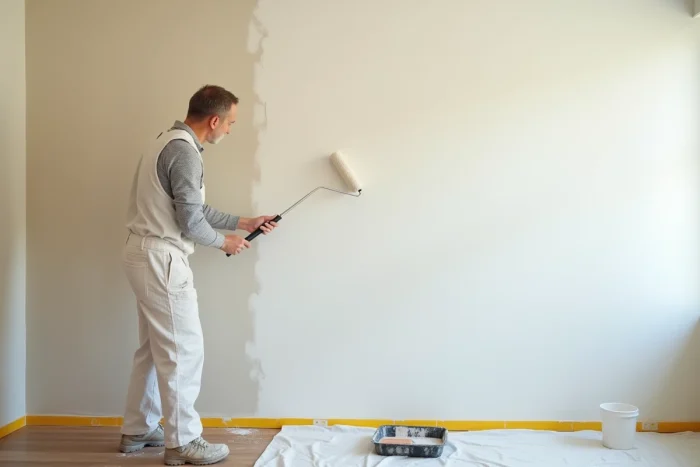
A wall with paint that is still holding does not require complete stripping. A light sanding with medium-grit sandpaper is enough to create the necessary adhesion for the new coat.
- Wash the wall with Saint-Marc laundry detergent or black soap to remove grease stains.
- Lightly sand to dull the surface, then dust with a damp cloth.
- Apply a primer if you are making a radical color change (light to dark or vice versa).
- Apply two coats of paint, crossing the passes (vertical then horizontal).
Each coat must dry completely before the next. Painting over a still wet coat causes visible roller marks and an uneven finish. These painting tasks are among the most cost-effective improvements to refresh an interior at a lower cost.