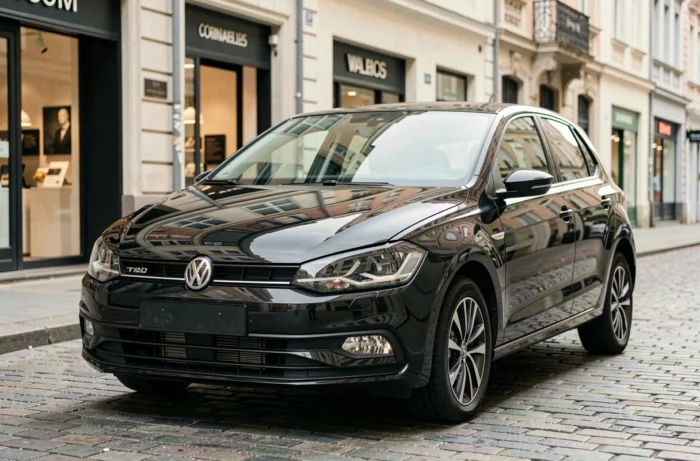
Between the TSI, MPI, and TDI engines, manufacturer recall campaigns, and the specifics of the DSG7 transmission, the Polo 6R encompasses technical points that deserve careful consideration before any purchase or maintenance program. What reliability gaps truly separate the different versions, and which maintenance aspects make a difference in the long term?
Polo 6R Engines: Comparison of Gasoline, Diesel, and GTI
The Polo 6R (produced from 2009 to 2017, including facelift) offers a range of engines with very different profiles. The table below summarizes the engine families and their documented points of attention.
| Engine Family | Type | Technical Feature | Main Point of Attention |
|---|---|---|---|
| TSI (turbo direct injection) | Gasoline | Direct injection, turbocharger | Timing chain (tensioner, elongation) |
| MPI (multi-point injection) | Gasoline | Indirect injection, atmospheric | Standard maintenance, few structural weaknesses |
| TDI (turbodiesel) | Diesel | Common rail direct injection | EGR valve, particulate filter depending on mileage |
| 1.4 TSI GTI (supercharger + turbo) | Performance gasoline | Double supercharging | Tensioner and timing chain, risk of early engine damage |
The MPI engines remain the mechanically simplest. In contrast, the TSI blocks, especially the 1.4 TSI GTI with double supercharging, require more rigorous monitoring of the timing system.
Owners of a Polo 6R equipped with the GTI engine should pay particular attention to the chain tensioner: documented failures have been associated with chain elongation and, in some cases, early engine damage.
Volkswagen Recall Campaigns: Three Alerts to Check by VIN
Several manufacturer campaigns directly concern the Polo 6R. Verifying them using the vehicle identification number (VIN) is a priority check, whether the vehicle is already in your possession or in the process of acquisition.
Campaign 35E5: Mechatronics of the DSG7 DQ200 Transmission
This campaign targets vehicles produced from October 2008 to November 2014 equipped with the DSG7 transmission. A pressure accumulator may crack, causing a loss of hydraulic pressure and leading to a loss of traction. On the used market, a Polo 6R with a DSG7 transmission that has not undergone campaign 35E5 represents a concrete risk.
Campaign 15H2: Timing of EA211 Engines
Published in August 2019, this campaign concerns certain Polos produced between December 2013 and March 2015. The camshaft belt pulley may deteriorate and phaser screws may loosen, with a risk of oil leakage onto the roadway. This defect affects the EA211 engine family, which equips a large portion of the gasoline versions of the facelift.
Systematic Verification Before Purchase
These campaigns are not always visible in the standard maintenance history. The only reliable method remains verification by VIN through the Volkswagen network or via manufacturer recall databases.
- Request the VIN from the seller and verify it before any transaction, even between private individuals
- Check if campaigns 35E5 and 15H2 have been performed, as they are free at the dealership
- Examine the complete history of workshop visits, not just periodic maintenance
Polo 6R Maintenance: Aspects That Change Depending on the Engine
A generic maintenance plan is not sufficient for the Polo 6R. The intervals and operations vary significantly from one engine to another.
Timing: Chain or Belt, Two Different Logics
The first-generation TSI engines (2009-2014) use a timing chain. Contrary to popular belief, a timing chain is not a maintenance-free component. On the TSI blocks of the Polo 6R, the chain tensioner must be regularly monitored, especially beyond several tens of thousands of kilometers. A rattling noise on cold start is often the first symptom of a failing tensioner.
The EA211 engines of the facelift (2014-2017) adopt a timing belt, with a replacement interval defined by the manufacturer. This change in technology simplifies maintenance but imposes a strict calendar follow-up.
DSG7 Transmission: Oil Change and Mechatronics
The DSG7 DQ200 transmission requires regular oil changes. Ignoring this operation accelerates wear on the mechatronics, a component whose replacement costs significantly more than a preventive oil change. Jerkiness at low speed or hesitation during gear shifts often signals an already advanced mechatronics problem.
Filters and Fluids Depending on the Type of Engine
- MPI Engines: Basic maintenance (oil, oil filter, air filter, spark plugs). Few specifics beyond standard follow-up
- TSI Engines: Addition of timing control (chain or belt depending on the generation) and monitoring of direct injection (possible valve fouling)
- TDI Engines: Replacement of the fuel filter, monitoring of the EGR valve, and regeneration of the particulate filter, especially in frequent urban use
- GTI 1.4 TSI Versions: Enhanced monitoring of the timing chain, checking the supercharger in addition to the turbocharger
Polo 6R and Urban Restrictions: Crit’Air Sticker and ZFE
Depending on the year of production and the Euro standard of the vehicle, the Polo 6R can receive a Crit’Air sticker ranging from 1 to 3. Euro 4 diesel versions (produced before 2011 approximately) receive a Crit’Air 3, which already limits access to certain low-emission zones.
Euro 5 and Euro 6 gasoline versions receive a Crit’Air 1, which guarantees them unrestricted access in almost all current French ZFEs. This factor directly impacts the resale value of a used Polo 6R: at equivalent mileage, a recent gasoline version retains a concrete advantage over an older diesel.
The distinction between pre-facelift generations (2009-2014, often Euro 5) and facelift (2014-2017, Euro 6) is therefore not only mechanical. It also conditions daily use in urban areas and the vehicle’s longevity within a progressively tightening regulatory framework.