What expense items actually absorb a wedding budget, and how have couples’ choices evolved this year? With the rise of intimate formats, the extension of celebrations over several days, and the shift from gift lists towards experiential gifts, recent data paints a picture of a wedding very different from that of five years ago. This article compares major measurable trends to help guide every organizational decision.
Wedding Budget: Where Couples’ Money Really Goes
Data published in September 2026 by MyNavi Wedding confirms that the average cost of a reception has reached a record level. The category that is growing the most is neither the dress nor the venue: it is guest hospitality. Catering, drinks, table entertainment, and guest gifts are concentrating an increasing share of expenses.
This reallocation reflects a change in priorities. Couples are reducing decorative items in favor of what guests actually experience during the day. A caterer capable of offering a menu suitable for multiple dietary needs now weighs more heavily in the balance than a flower wall.
To track these developments month by month, articles on Esprit Mariage regularly detail the budget items to watch and the choices of service providers.
Micro-Wedding or Extended Celebration: Comparison of Reception Formats
This year, two formats are emerging, with opposing budgetary and organizational logics. The table below summarizes their characteristics based on documented trends.
| Criteria | Micro-Wedding (fewer than 50 guests) | Wedding Weekend (2 to 3 days) |
|---|---|---|
| Number of Guests | Small circle, close family and friends | Expanded list, sometimes in multiple waves |
| Budget per Guest | Higher (high-end venue, gourmet menu) | Diluted over several meals and activities |
| Venue | Small estate, private restaurant, villa | Estate with accommodation, group gîte |
| Organization | Concentrated preparations, fewer service providers | Heavy logistical coordination (shuttles, multi-day planning) |
| Guest Experience | Intimacy, in-depth exchanges | Immersion, shared time, common activities |
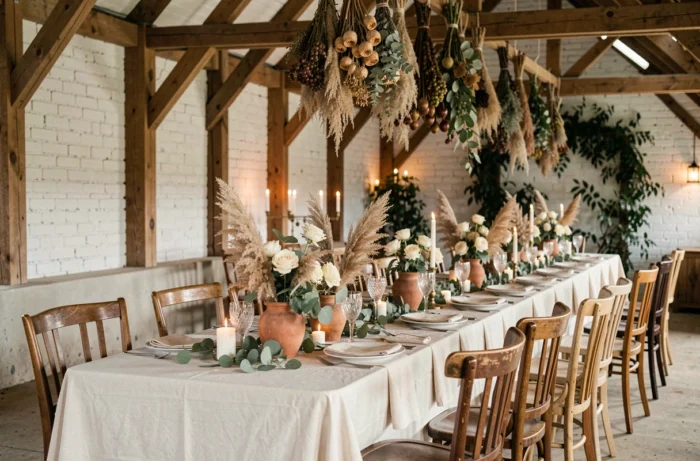
Zola’s data published in September 2026 indicates that a significant portion of couples organizes at least one additional event around the main ceremony. Next-day brunch, rehearsal dinner the night before, group activity on Sunday morning: the wedding extends beyond the confines of a single day.
In contrast, searches for micro-weddings are significantly increasing in the UK and France. Several sources from September 2026 describe a growing demand for smaller venues and ceremonies focused on experience rather than numbers. The choice between these two formats depends less on the overall budget than on how the couple wishes to experience this moment.
Wedding List: The Shift Towards Experiential Gifts
The classic wedding list (dinnerware, appliances, linens) is declining in favor of options oriented towards experiences. Honeymoon funds are among the most requested options this year. More broadly, couples prefer shared experiences over material goods.
This shift has practical implications for organization:
- Online crowdfunding platforms are replacing in-store gift lists, simplifying management for geographically distant guests
- Couples who choose a honeymoon as their main gift must anticipate booking well before the big day to benefit from consistent rates
- Some guests remain attached to physical gifts: planning a short selection of items in addition to the fund avoids frustrations
The format of the list also influences the overall budget. A couple financing their honeymoon through the fund can reallocate an envelope initially intended for the trip towards a reception item (photographer, music group, furniture rental).
Wedding Preparations: The Game-Changing Timeline
The lengthening of booking timelines is a measurable fact. The most sought-after venues are now booked well over a year in advance, and the trend towards multi-day celebrations further complicates planning.
Securing the venue before setting the date remains the most counterintuitive and cost-effective advice. A venue available on a Friday or Sunday often costs significantly less than a Saturday in high season. Couples who accept this flexibility free up a margin that can be reinvested in other areas.
Three decisions condition everything else:
- The number of guests, which determines the size of the venue, the volume of catering, and the overall budget
- The choice between a religious ceremony, a civil ceremony only, or a secular ceremony, which alters the schedule of the day
- The use or not of a wedding planner, particularly justified for multi-day formats where logistical coordination becomes a full-time job
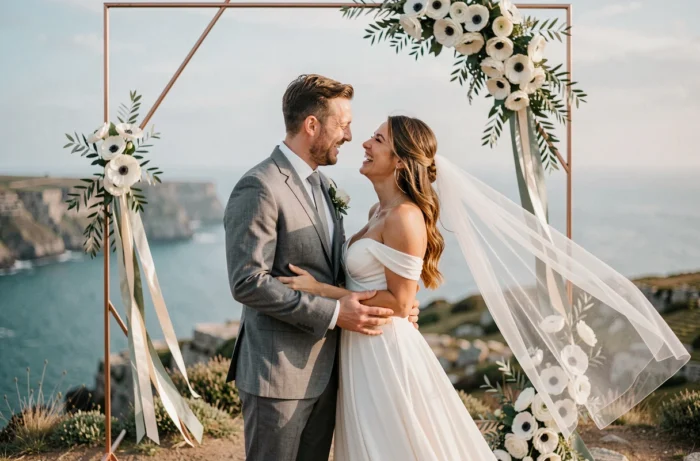
Aesthetically, the 2026 trends show a polarization between clean minimalism and more elaborate vintage or rococo-inspired decor. The two coexist without one dominating the other. The choice of theme often stems from the venue itself: a castle calls for a different treatment than a renovated farmhouse or an urban rooftop.
The most structuring data of this year remains the shift of the budget towards the experience lived by guests. Whether the format is intimate or spread over a weekend, couples invest where memories are made: the table, the music, the shared time. The decor follows, but no longer leads.