
The numbers don’t lie: since 2021, digital platforms monopolized by regional producers have shown double-digit growth. Now, major retailers and traditional food chains have rushed into the breach, proudly showcasing local selections on their sites. Distribution channels are wavering, shaken by this unexpected turn.
This simultaneous advance of local commerce and e-commerce intrigues food professionals. This shift does not merely revise logistical patterns: it rewrites the relationship between producers and buyers, prompting everyone to rethink their selection criteria when placing orders.
Why buying local online is increasingly appealing to consumers
The rise of online local shopping reveals a deep transformation of French consumption practices. This phenomenon can be explained by a desire for proximity, but also by the search for consistency and the wish to support the regional economy. Once reserved for market stalls or specialized shop windows, local products are now confidently displayed on digital platforms. The results are immediate: the average basket dedicated to responsible local purchases online jumps by 28% between 2022 and 2023, according to the Observatory of New Consumption Trends.
The comfort of shopping acts as a catalyst. Consumers demand an authentic experience without sacrificing the fluidity of the digital realm. Navigating, comparing, reserving, and paying for purchases with just a few gestures, while maintaining direct contact with the producer: this promise attracts and retains customers. The user experience is enhanced through geolocation or tools like Leboncoin 06, frequently cited for their ability to simplify the search for regional products at the local level.
Responsible consumption is becoming firmly established in behaviors, driven by a generation attentive to the impact of their purchases. According to studies, 72% of French people express a desire to prioritize local, including online, betting on traceability and quality. Buying local online then becomes a militant gesture, but also a new habit embedded in the daily lives of buyers.
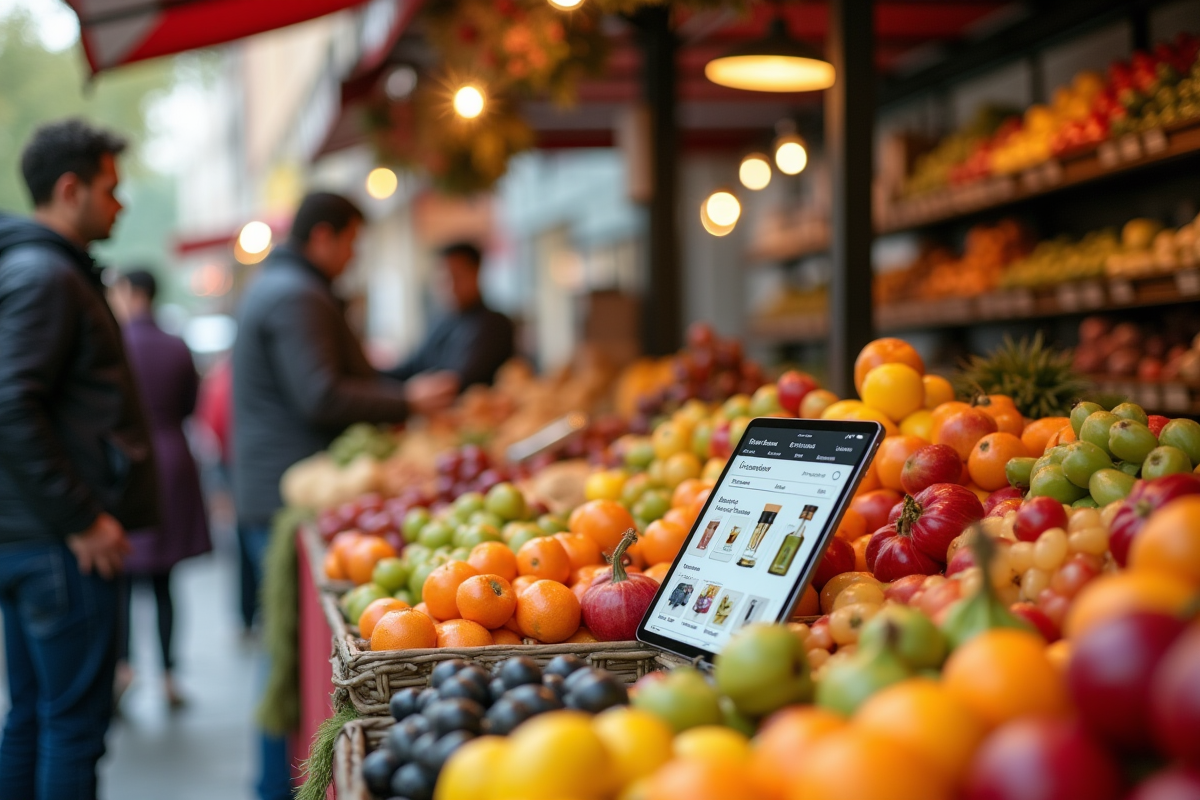
Local commerce and e-commerce: what impacts on our lifestyles and on local actors?
The intersection of local commerce and e-commerce redraws the boundaries. The digitization of points of sale disrupts the usual dynamics between merchants and residents. Local marketplaces, direct sales sites, social networks: all of these levers modify the shopping journey and customer expectations. Payment methods are changing, speed is essential, and the notion of proximity is taking on a new shape.
In response to this evolution, local actors are rethinking their methods. They are investing in digital marketing and logistics, betting on solutions that break the mold. The health crisis has acted as a true accelerator. The Federation of Specialized Commerce observes that 37% of local shops in France now offer an online service in 2023, compared to only 18% three years earlier. Today, digital technologies are no longer the privilege of large brands.
These transformations lead to several notable consequences:
- On shopping habits: extended hours, increased accessibility, personalized offers based on customer needs.
- On the local economy: job retention, enhancement of regional know-how, and creation of renewed loyalty with customers.
Connected local commerce no longer aims solely to exist physically. It is part of a dynamic that transcends borders, capable of reshuffling the cards of the global economy while preserving the identity of territories. The challenge: to invent new connections, strengthen the resilience of local actors, and assert a solid presence against digital competition.