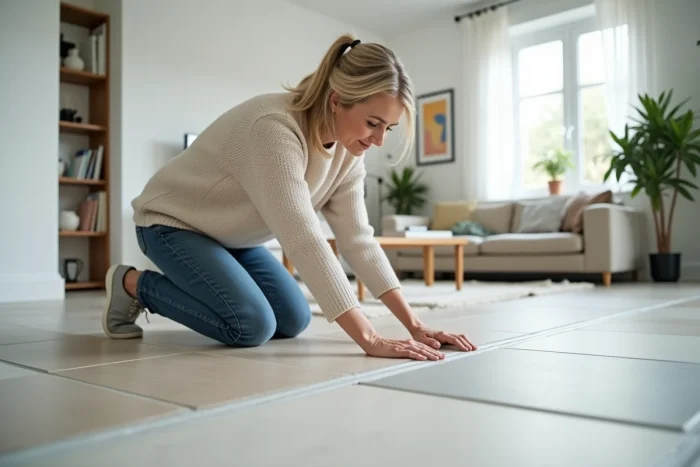
A thinner tile joint is not always synonymous with simplified installation or flawless aesthetics. On the market, some tiles are machined after firing while others retain their original shape, which changes the game during installation.
Dimensional tolerance varies according to the manufacturing method, impacting the regularity of the edges and the width of the necessary joints. This technical difference influences the finish, durability, and customization options, without the price or reputation of manufacturers systematically guaranteeing a better result.
Rectified tiles: understanding their features and benefits for a modern interior
Rectified tiles stand out for their sharp edges, adjusted to the millimeter thanks to precise cutting done after firing. Unlike conventional tiles, each rectified tile displays rigorous calibration, allowing for installation with thin and regular joints. This characteristic promotes a sense of visual continuity, highly valued in modern interior design projects.
This type of tile is perfectly suited for large living spaces, kitchens, and bathrooms where every detail matters. Rectified tiles highlight the texture of materials, whether it’s ceramic stoneware with a concrete effect, wood-look tiles, or marbled finishes. Visually, the result is understated, elegant, and creates the illusion of a larger space, in harmony with contemporary furniture.
However, the success of the installation depends on the flatness of the substrate and the care taken in the layout. Some craftsmen advocate for rectified tiles for their decorative potential but remind us that a joint, even discreet, remains essential to ensure the longevity of the work. Every project imposes its own requirements and constraints: there is no universal solution, only choices adapted to each context.
To delve deeper into the distinction between types of tiles or refine your selection, consult learn more on Votre Déco. The article precisely details the technical and aesthetic criteria, from rectified tiles to other non-rectified finishes.
Rectified or non-rectified tiles: what are the concrete differences in daily life?
The choice between rectified tiles and non-rectified tiles is not simply a matter of visual preference: it is a difference that is verified every day. Rectified tiles, with their straight edges cut after firing, allow for the installation of very thin joints. This detail, far from being trivial, transforms the perception of space. In a bathroom, kitchen, or living room, visual continuity imparts a modernity and elegance that is hard to match.
On the other hand, non-rectified tiles retain their original, somewhat irregular edges. This more traditional process requires wider and more visible tile joints. Some homeowners appreciate this more authentic look, which highlights the charm of the material. Non-rectified glazed stoneware is well-suited for those seeking a handcrafted aesthetic or who accept a less uniform appearance.
Here are the key points to remember when making a choice:
- The installation of rectified tiles requires meticulous preparation: a perfectly flat substrate, precise layout, and adherence to a reduced joint width for a result that meets expectations.
- Non-rectified tiles are more tolerant of small irregularities. They are suitable for renovations or quick installations, especially if one favors a traditional style in a kitchen or bathroom.
The difference between rectified and non-rectified tiles is also evident in maintenance. Wider joints more easily trap dust and debris, while well-executed thin joints simplify daily cleaning. Choosing one or the other comes down to selecting between a modern aesthetic and a more authentic atmosphere, between technical rigor and indulgence towards imperfection, between demand and practicality.

Making the right choice: what benefits for your project and why prioritize rectified tiles?
Choosing rectified tiles is betting on precision and visual harmony. The perfectly straight edges allow for very thin joints, almost invisible to the naked eye. This impression of an uninterrupted surface elevates the aesthetics of an interior, whether it’s a living room, kitchen, or bathroom.
Rectified tiles for floors or walls make perfect sense in projects aiming for modernity. The regularity of rectified tiles enlarges the space, captures light, and highlights every element of the decor.
Here are a few concrete situations illustrating the advantages of rectified tiles:
- In the case of wood-look tiles, the rectified format enhances the appearance of ceramic stoneware: the planks align seamlessly, accentuating the illusion of real wood flooring, with the durability of tiles.
- For open spaces, the visual continuity provided by rectified tiles with straight edges enhances a contemporary or minimalist layout without visual overload.
Rectified tiles also offer greater flexibility in terms of finishes. Whether one desires a concrete, wood, stone, or marble effect, the precision of the joints showcases each texture. For high-traffic areas, this choice minimizes defects and simplifies maintenance, a central concern in today’s interiors.
Ultimately, rectified tiles create a clear, seamless perspective where light flows and coherence makes perfect sense. It is up to each individual to determine what atmosphere they wish to establish underfoot: linear modernity or the assured charm of the irregular.