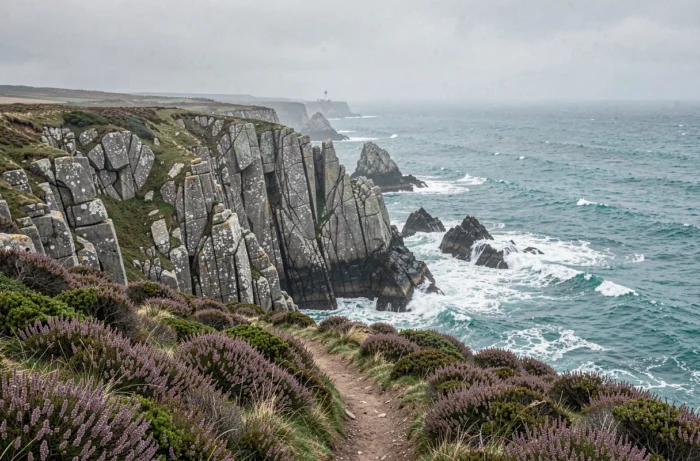
Brittany saw a rebound in tourist numbers in summer 2025, following a decline in 2024 linked to fewer visitors from France, according to Insee. This return of visitors has not benefited all sites equally: the most heavily publicised attractions absorb most of the crowds, while entire stretches of coastline and inland areas remain accessible even in peak season.
The inscription of the Carnac megaliths and the shores of the Gulf of Morbihan on the UNESCO World Heritage List on 12 July 2025 is also reshaping the map, opening up opportunities to explore lesser-known neighbouring towns.
A car-free getaway in Brittany: trains, bikes and seasonal constraints
Planning a car-free stay in Brittany means working around a TER network that serves coastal towns well, but whose rules for carrying bikes vary by season. The Baie de Morlaix Tourist Office explains that bikes travel free on TER trains and do not require a reservation outside the summer season. From June to September, bike spaces must be booked and cost €1 per bike; availability is limited.
This means choosing between travelling in spring or autumn for complete flexibility, or booking early for summer and accepting that you may not always be able to take your bike on the train you want. Morlaix is a strategic starting point at the crossroads of two cycle routes, the Vélodyssée and the Vélomaritime, which connect both northern Finistère and the Pink Granite Coast.
Several regional resources bring together information on routes and accommodation suited to this kind of trip, including https://www.bretagne-net.com, which lists options by area.
The Roscoff Tourist Office also lists coastal routes that pass fishing ports and maritime heritage sites, as well as “Accueil Vélo”-certified visitor centres offering route information and practical services. Combining train and bike opens up stretches of coastline that are inaccessible by car, where the GR 34 follows coves with no parking or paved roads.
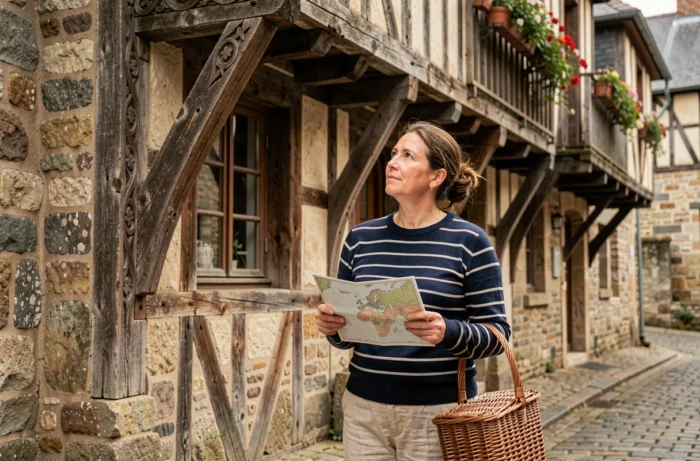
The Carnac megaliths after UNESCO listing: beyond the stone rows
World Heritage status covers more than the famous rows of standing stones visible from the road. The UNESCO-listed property includes monuments spread across several towns around Carnac and the shores of the Gulf of Morbihan. Dolmens, burial mounds and cairns can be found in hamlets that still see relatively few visitors.
This geographical spread changes how you can explore the site. Instead of stopping for two hours at the Ménec stone rows, a two- to three-day getaway lets you cycle through neighbouring towns and discover other megalithic monuments without queuing. The area lends itself to slow exploration, along coastal paths and country lanes.
Visitor numbers are still a consideration, however. UNESCO status typically sparks a surge of interest in the months following inscription. Precise visitor figures for these satellite sites in the 2025–2026 season have not yet been compiled, so it is difficult to tell whether the crowds are still concentrated around the main stone rows or beginning to spread to outlying towns.
The Pink Granite Coast and inland Brittany: choosing the right season
The Pink Granite Coast, between Perros-Guirec and Trégastel, is among Brittany’s most photographed landscapes. Granite formations sculpted by erosion draw visitors all year round, but crowds peak in July and August on the customs officers’ path around Ploumanac’h.
There are two ways to avoid the crowds:
- Plan your trip for May–June or September, when the low-angle light brings out the pink rocks and the trails are easy to enjoy without the crowds. Accommodation is also cheaper outside school holidays.
- Head further inland. The Traouïéro Valley, just a few kilometres from the coast, offers a woodland landscape of granite formations and is far less crowded than the coast itself.
- Choose places accessible only on foot or by bike, such as Milliau Island in Trébeurden (accessible at low tide), where the lack of a motorised shuttle naturally limits visitor numbers.
Inland Brittany remains the poor relation of travel guides, despite its remarkable biodiversity and built heritage, including chapels, parish enclosures and fountains.
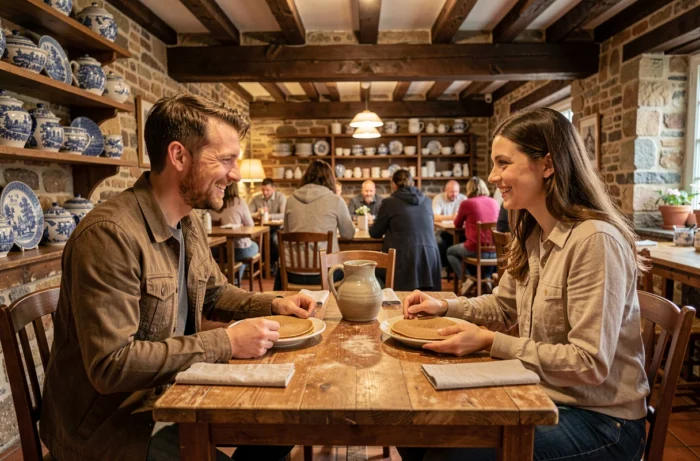
Maritime heritage and fishing ports: an overlooked way to explore
Guides to Brittany tend to highlight fortifications (Saint-Malo, Concarneau) and lighthouses, but the living maritime heritage of working fishing ports offers a more original thread for planning an itinerary.
Ports such as Le Légué (Saint-Brieuc), Erquy and Roscoff still have fish auctions, traditional boatyards and artisan canneries. Visiting a port as the boats return reveals intangible heritage that neither museums nor coastal trails can convey.
This kind of discovery is particularly well suited to cycling. Ports are often linked by sections of the GR 34 or by greenways. Travelling between ports by bike makes it possible to cover one stretch in a day, with short stages suited to a leisurely ride rather than a sporting challenge.
Reservations and access: what to plan ahead
Some heritage sites in Brittany require reservations, particularly now that managing visitor flows has become a post-COVID priority. Access to the Carnac stone rows is restricted at certain times. Summer crossings to the islands of Bréhat, Batz and Ouessant sell out quickly.
Booking ferry crossings and time slots for listed sites at least three weeks in advance during peak season is the most effective precaution. Outside July and August, access is generally unrestricted or much more flexible.
Brittany is better suited to slow, car-free exploration than many people realise, provided you tailor your expectations to the season. UNESCO-listed sites, major cycle routes and working fishing ports combine to create an itinerary unlike the usual tourist circuits.